Table Of Content
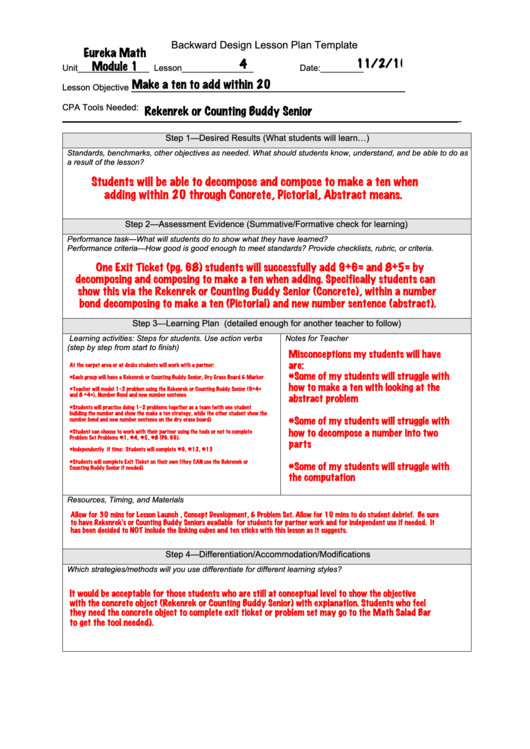
Reflect on your assessments of student learning from Step 3 to determine the teaching methods and learning activities that will best support students to succeed. When considering these questions and writing your goals, it can be easy to focus on what you want your students to know or understand about the subject matter. But many of the most exciting and memorable learning experiences go beyond the acquisition of new knowledge. Fink’s Taxonomy of Significant Learning (2013), a framework that details six types of learning that produce these experiences, can help you develop many other kinds of learning goals.
Backwards Design Step Three: Learning Strategies / Activities
Overall, backward design offers a structured and systematic approach to curriculum development that promotes student-centered learning and a deeper understanding of key concepts. By starting with the end goal in mind and carefully considering the learning needs of their students, educators can create more meaningful and impactful learning experiences. With its emphasis on big ideas, student engagement, and assessment alignment, backward design provides a framework for educational excellence in both traditional and online learning environments. In understanding the stages of backward design, it’s essential to grasp the backward design framework. At its core, backward design centers on identifying desired results, determining acceptable evidence of learning, and planning learning experiences and instruction to achieve those results.
Understanding How to Use Backward Design in Your Lesson Planning
New Book – Signature Pedagogies in International Relations - E-International Relations
New Book – Signature Pedagogies in International Relations.
Posted: Wed, 28 Apr 2021 07:00:00 GMT [source]
This is a hard pill to swallow, because I wasn’t half bad as a teacher. I had decent relationships with my students and I believe most of them had good experiences in my classroom, but real, durable learning? Just like any plan, your initial Backward Design framework may require adjustments. Formative assessment expert Paul Black advocates for continuous improvement through the feedback loop, which involves tweaking the lesson plans based on student performance and other data. Teachers like Carol Ann Tomlinson, known for her work on differentiated instruction, have noted that when students understand what they're working towards, they are often more engaged and motivated.
Evolution Over Time
In particular, beware of words like “understand” or “know.” Exactly what it means to “understand” or “know” something is open to interpretation. An undergraduate’s level of “understanding” of a topic and that of the instructor will vary wildly, and it will be difficult for students to know which level of understanding they should be aiming for. When developing ILOs, ask yourself how you will know that a student “understands” the material – what will they need to do, or say to demonstrate their understanding? Your answer to this question should provide you with more specific (and measurable ILOs. As teachers, you want students to learn skills that can equate to great academic results, but that can also be applied in later life.
Learner-Centered vs Content-Centered Approach
Renowned educator Carol Ann Tomlinson, who we mentioned earlier, supports the idea of collaborative teaching and planning. Each of these educational frameworks has its merits, but Backward Design stands out for its focus on alignment between learning objectives, assessments, and instructional strategies. Understanding how it compares to other frameworks helps educators make more informed choices about which approach to use in different teaching and learning contexts.
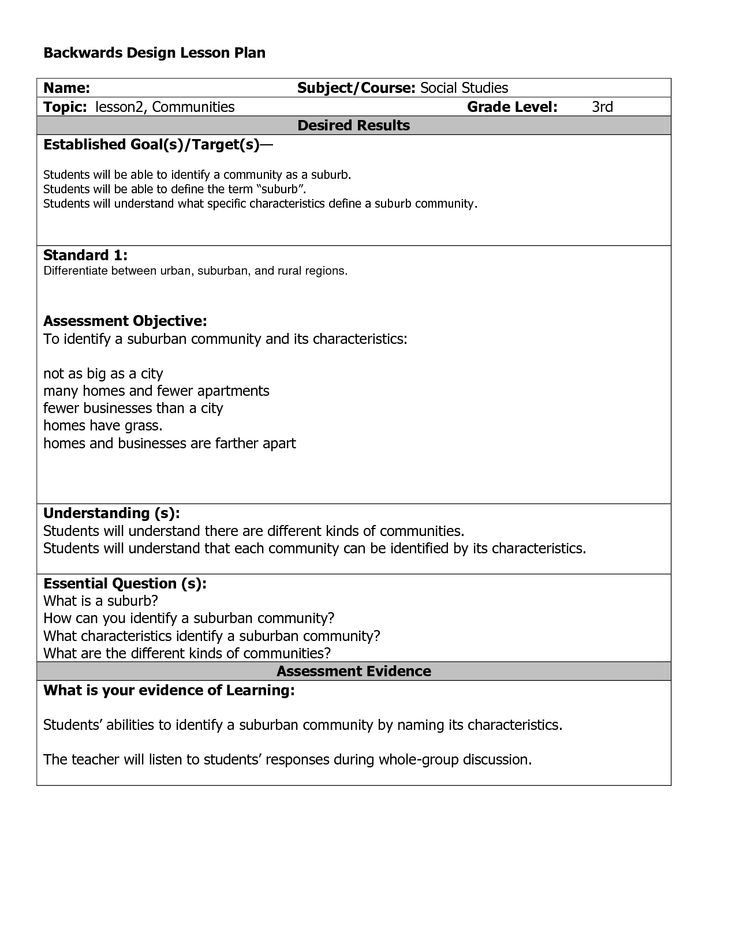
The Most Common Barriers to Learning – And How to Overcome Them
For example, if the goal is for students to learn basic facts and skills, traditional quizzes and tests might be the most appropriate type of assessment to use. However, when the goal is enduring understanding, more complex and authentic assessment strategies might be needed to assess student learning. The illustration below shows an alignment between specific assessment types and the different types of evidence they provide. In the second stage of backward design, instructors create the assessments students will complete in order to demonstrate evidence of learning and even progress towards achievement of the learning objectives. (26 PD Hours) In this course, participants will learn the importance of and how to align your instructional strategies and activities with your learning objectives and plans for assessments.
Backward design lesson planning – What is it & why you should use it
A natural result of that much content was significant “sage on the stage” time, with lectures replacing what should have been active lessons. The result was very nearly always far less transfer and skill acquisition than I wanted. Students often showed a surface understanding of the skills we discussed but failed to exhibit them over the long term. An integration of “backwards planning” unit design with the “two-step” lesson planning framework – This article takes a look at the process of backwards planning in a detailed case study of a math class. I was first introduced to this concept in my sixth year of teaching, and the genius of it completely blew me away. I used it when planning my next unit and experienced the biggest spike in student success I’d ever seen.
Contrast with Traditional Forward Design

At its core, backward design is a framework that emphasizes starting with the end goal in mind. Rather than beginning with content and activities, educators first identify the desired learning outcomes and then design instruction to achieve those outcomes. This approach ensures that every aspect of the curriculum is purposefully aligned with the overarching goals of the course or lesson. Traditional design lesson plans review standards or learning objectives (which can be federal, national, or personal).
The Backward Design Process
Public school teachers will often “teach the test” by focusing primarily on what will be on federal or state standardized tests instead of other content or modules in textbooks. Do you have a final exam surrounding a few modules from a book or from an online class? Make sure that the exam has a section for each module so students can study the entire course’s material from start to finish.
Once you're comfortable with the approach, you can expand to more complex planning projects. The key question is whether a one-size-fits-all approach can adequately cater to a classroom that is increasingly diverse in terms of learning styles, physical abilities, and cultural backgrounds. According to these critics, the structured, step-by-step nature of Backward Design could potentially stifle spontaneity and limit opportunities for exploratory learning. This could be particularly problematic in subjects like the arts, where creative exploration is key. This is particularly burdensome for educators who may already be grappling with other responsibilities like grading, classroom management, and ongoing professional development.
By aligning instructional activities with specific learning goals of the course, educators can ensure that students make meaningful progress and demonstrate their understanding through formative assessments and peer review. At the end of the process, assessments provide valuable insights into students’ progress and help instructors determine the effectiveness of their instructional methods. By incorporating backward design principles into their curriculum planning, educators can create more engaging and effective learning experiences that prioritize student success and foster a deeper understanding of key concepts. One of the key benefits of backward design is that it promotes a more focused and intentional approach to curriculum development.
Stepping into a Virtual Reality Classroom for Teacher Training - Columbia University
Stepping into a Virtual Reality Classroom for Teacher Training.
Posted: Fri, 08 Jun 2018 07:00:00 GMT [source]
Set aside specific content—remember, that comes toward the end of the backward design process—and think about the big-picture, lasting impact you want your course to have on students. For example, if I’m planning a curriculum for losing weight by cutting out sugar, my first step would be to plan out the course curriculum by listing out all the topics related to the subject matter. Then the next step is to bring in the various lessons that fit the topic so that I’m breaking down the topic into sub-topics. Finally, the last step is to develop assignments and or quizzes to evaluate student’s grasp of the material. The challenge with this approach is that traditional design overlooks and neglects the course outcomes and how a student might achieve them resulting in lackluster results and engagement. The scope of your assessments should be in line with the outcomes, and the balance between concepts and skills in these assessments should match that presented in your ILOs.
While PBL and Backward Design both stress the importance of real-world applications, they differ in structure. PBL is generally more open-ended and may not align neatly with specific learning objectives. One of the most celebrated aspects of Backward Design is its focus on clear learning objectives. By defining what students should know or be able to do by the end of a lesson, educators can offer a more targeted and effective learning experience.
Backward design in a lesson plan means starting with the end objective, such as student-focused learning goals, and designing your assessments and learning materials afterward to ensure your students achieve those objectives. Research shows that retrieving and using information is a critical piece of achieving learning (Karpicke & Roediger, 2008). As such, students must have multiple opportunities to practice and apply the specific knowledge and skills they need to perform well on assignments and be successful in your course.
The idea behind backwards design is to teach and plan towards the “end goal” or learning point. Backwards design is a specific process of creating units and lesson plans. This is followed by formulating a final assessment that encompasses all of the learning objectives. Finally, each lesson in the unit is planned to address at least one of the culminating objectives.


No comments:
Post a Comment